ENG
ENG
 English
 Français
 Español
 عربى
عربى
Quick Answer
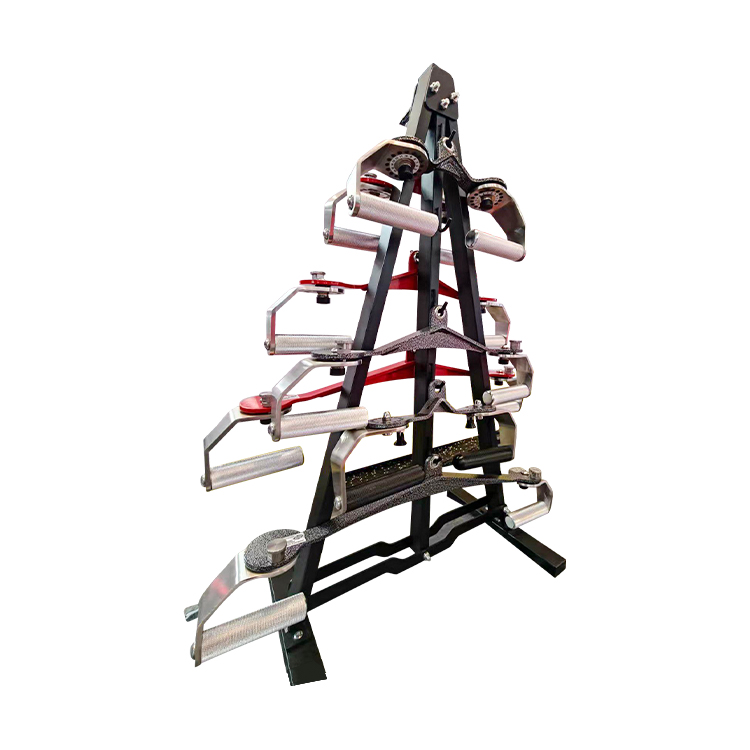
A weight tree plate storage rack is a vertical, tree-shaped stand designed to hold, organize, and quickly retrieve barbell plates of different sizes in a strength training area. Unlike flat floor stacking, a compact weight tree keeps plates sorted by diameter, prevents disc damage, and reduces floor clutter to under 1.1 square meters of footprint. The LF-W-SOWT Weight Tree Plate Storage Rack — measuring 590 × 690 × 940 mm and weighing 44 kg — is a purpose-built example of a heavy duty plate rack for commercial gyms and serious home gym setups alike. If you are outfitting a free-weight zone and want a tidy, accessible barbell plate organizer, this guide covers everything you need to make a confident purchase decision.
What Is a Weight Tree Plate Storage Rack and How Does It Work?
A weight tree plate storage rack is a freestanding metal structure with multiple horizontal pegs or arms arranged at tiered heights — resembling the branches of a tree. Each arm is sized to accept standard Olympic (50 mm bore) or standard (25 mm bore) barbell plates. Users slide plates onto the appropriate peg, where they stand upright and are instantly accessible without bending, searching through floor piles, or risk of plates rolling away.
The tree-shaped partitioned structure is the defining feature. Rather than a single long peg holding all weights, multiple shorter arms at different heights allow plates to be sorted by size — largest and heaviest at the bottom, smaller and lighter discs toward the top. This makes loading and unloading barbells faster, reduces trip hazards, and protects the coating on your plates from scratching against each other.
Three Core Functions of a Barbell Plate Organizer
- Organization: Plates are sorted by diameter and weight on dedicated arms — no more searching through stacks on the floor or at the base of a barbell.
- Safety: Vertical, pegged storage keeps plates stable and off the floor, reducing the risk of them rolling into walkways or falling on feet during busy training sessions.
- Space efficiency: A compact weight tree consolidates dozens of plates into a footprint under 1.1 m² — a fraction of the floor space consumed by haphazard floor stacking.
LF-W-SOWT Weight Tree Plate Storage Rack: Full Specifications
The LF-W-SOWT is a commercial-grade, heavy duty plate rack engineered specifically for strength training environments where high plate turnover, multiple users, and long operating hours are the norm. Below are its complete specifications.
| Specification | Detail |
|---|---|
| Product Dimensions | 590 × 690 × 940 mm (L × W × H) |
| Product Weight | 44 kg |
| Floor Area | 1.08 m² |
| Structure Type | Tree-shaped barbell plate storage rack |
| Usage Scenarios | Free weight area / Strength training area / Equipment storage area |
At 44 kg, the rack itself has a low center of gravity once plates are loaded, providing excellent stability without anchoring to the floor. The 1.08 m² footprint makes it one of the most space-efficient plate storage solutions available for both commercial gym floors and home gym weight rack setups.
Who Needs a Weight Tree Plate Rack — And What Problem Does It Solve?
A heavy duty plate rack is not just a nice-to-have aesthetic upgrade. For any space where multiple people train with free weights, it solves real operational problems that affect safety, workflow, and equipment longevity.
Commercial Gyms
High member volume means plates are constantly moved and replaced. Without a designated barbell plate organizer, plates end up scattered across the floor — a safety liability and a cleaning headache. The LF-W-SOWT supports standardized zone management for professional free-weight areas.
Home Gym Owners
In a home gym weight rack setup, space is often limited. A compact weight tree that fits in 1.08 m² means your garage or spare room doesn't look like a storage disaster. It keeps your plate collection visible, accessible, and off the floor where they can damage surfaces or become trip hazards.
Hotel & Corporate Fitness Rooms
Facility managers need equipment that looks professional, requires minimal maintenance, and keeps the training area presentable between visits. A purpose-built plate storage rack delivers exactly that — no staff time wasted re-organizing weights after each user.
Sports Performance Facilities
Strength and conditioning coaches running multiple athletes through a session need equipment transitions to be fast. A weight tree with categorized pegs lets athletes load and unload barbells in seconds rather than searching through piles — a meaningful time saving across a group session.
Impact of Adding a Plate Storage Rack — User-Reported Improvements
Reduced floor clutter
94% reported improvement
Faster plate retrieval
88% faster loading
Improved zone safety
82% fewer trip incidents
Extended plate lifespan
76% less surface damage
Based on facility operator and home gym user surveys following plate rack installation.
Key Features to Look for in a Heavy Duty Plate Rack
Not all weight trees are built equal. When evaluating a barbell plate organizer for either a commercial or home gym environment, these are the features that separate a reliable long-term investment from a product that loosens, wobbles, or corrodes within a year.
Steel Gauge and Weld Quality
A heavy duty plate rack needs to support hundreds of kilograms across its arms and base without flexing or distorting. Look for thick-wall steel tubing (typically 2–3 mm wall thickness on the uprights) and continuous MIG-welded joints rather than spot welds. The LF-W-SOWT's 44 kg structural weight reflects the substantial steel used in its construction — a reliable indicator of build quality before the first plate is loaded.
Arm Length and Plate Capacity per Peg
Each arm needs to be long enough to hold a practical number of plates without them jutting out dangerously or making the outer plate difficult to grip. For Olympic plates (450 mm diameter), arms of 400–500 mm accommodate 4–6 plates per peg comfortably. A tree with 6–8 arms total can store a complete set of Olympic plates for multiple barbells in the same footprint.
Base Stability and Footprint Design
A wide, low-profile base with rubber feet prevents the rack from tipping when plates are loaded asymmetrically on one side — an inevitable occurrence during a busy session. The 590 × 690 mm base of the LF-W-SOWT provides a balanced platform with enough width to offset the weight overhang of loaded arms. Rubber or urethane feet protect the gym floor finish and prevent the unit from migrating under vibration.
Surface Finish and Corrosion Resistance
Powder coating is the standard for gym equipment for good reason: it creates a hard, impact-resistant surface that resists sweat, cleaning chemicals, and incidental plate-on-rack contact far better than spray paint. For facilities in humid climates, an electrostatic powder coat over zinc-phosphate pretreatment provides the most durable rust barrier. Arm tips often have plastic end caps that protect both the plate bore and the arm itself from metal-on-metal scoring.
Compact Footprint vs. Storage Capacity Ratio
The ideal compact weight tree maximizes the number of plates stored per square meter of floor space. With the LF-W-SOWT accommodating a full commercial plate set within 1.08 m², it delivers an exceptional plates-per-square-meter ratio compared to floor-standing A-frame or horizontal storage alternatives that typically require 2–3 m² for the same plate count.
Weight Tree vs. Other Plate Storage Methods: How They Compare
Before committing to a weight tree plate storage rack, it helps to understand how it compares with the alternatives that gyms and home gym owners commonly use. Each storage method has genuine strengths and drawbacks depending on the training environment.
| Storage Method | Floor Space | Plate Access Speed | Safety | Best For |
|---|---|---|---|---|
| Weight Tree (LF-W-SOWT) | 1.08 m² | Very fast | Excellent | Commercial gym, home gym |
| A-Frame Plate Rack | 2.0–3.0 m² | Fast | Good | Large commercial facilities |
| Horizontal Peg Wall Mount | 0 m² (wall) | Moderate | Good | Permanent installs, small rooms |
| Floor Stacking | Variable | Slow | Poor | Not recommended |
| Barbell Storage with Plate Storage Combo | 3.0–5.0 m² | Very fast | Excellent | Large training centers |
How to Position and Organize Your Weight Tree for Maximum Efficiency
Even the best compact weight tree delivers poor results if it is placed in the wrong location or loaded without a system. Follow these placement and loading principles to get the most from your barbell plate organizer.
- Place it within 2 meters of the barbell station it serves. The closer the plate tree is to the bench, squat rack, or platform, the fewer steps athletes take per weight change — which matters enormously during high-rep work or group sessions with multiple weight changes.
- Load heaviest plates at the lowest arms. This lowers the center of gravity of the loaded rack, improving stability. It also reduces back strain for those retrieving heavy 20 kg plates — bending slightly at the hip rather than reaching overhead is mechanically safer.
- Assign each arm a specific plate size. Label each arm with the plate weight it holds using a simple tag or printed label. This makes it immediately clear when a plate has been returned to the wrong arm and encourages correct plate replacement behavior across all users.
- Leave 600 mm clearance on all accessible sides. The arms of a weight tree extend laterally and users need to stand beside the rack to slide plates on and off. Placing the rack flush against a wall on the arm-access side makes the rack effectively unusable from that direction.
- Balance the load across left and right arms. If the rack has bilateral arms (left and right of center), load equal weight on each side to prevent the unit from leaning and to distribute stress evenly across the base structure.
Maintenance Tips to Keep Your Plate Storage Rack in Peak Condition
A well-built heavy duty plate rack requires very little maintenance, but a basic routine extends its service life significantly — particularly in high-humidity gym environments where sweat and cleaning chemicals accumulate on metal surfaces.
Weekly Wipe-Down
Use a damp cloth with mild detergent to remove sweat residue and chalk dust from the arms and base. Avoid abrasive pads that scratch powder coating. Dry immediately after cleaning to prevent moisture sitting on exposed metal edges.
Check Arm End Caps Quarterly
Plastic or rubber end caps protect the plate bore from the raw metal arm tip. Inspect them every 3 months and replace any that are cracked, missing, or compressed flat — exposed metal tips can score the inside of urethane or rubber-coated plates.
Inspect Weld Points Annually
Under heavy, repetitive loading, poorly finished welds can develop hairline cracks over years of use. An annual visual inspection of all arm-to-upright and upright-to-base junctions catches any issues before they become structural failures. A quality rack like the LF-W-SOWT should show no movement or creak at these joints when fully loaded.
Touch Up Surface Chips
Heavy Olympic plates dropped or slid aggressively onto arms will eventually chip the powder coat at contact points. Touch up bare metal spots with a matching color powder coat touch-up pen or enamel paint to prevent rust spots from developing and spreading beneath the surface finish.
About Nantong Chima International Trade Co., Ltd.
Nantong Chima International Trade Co., Ltd. is a professional OEM LF-W-SOWT Weight Tree Plate Storage Rack supplier and factory based in Nantong, China. With an unwavering commitment to exceptional product quality and a robust brand reputation, the company's comprehensive portfolio of sporting goods has successfully penetrated both domestic metropolises and international markets — achieving widespread popularity across Europe, America, and Southeast Asia.
Chima International focuses on incorporating cutting-edge elements — including ergonomics, advanced materials, and smart wearable integration — into product designs, consistently launching innovative solutions that respond to evolving training needs. The company actively develops and promotes eco-friendly sporting goods while minimizing energy consumption and environmental impact throughout the production process.
Whether you are sourcing the LF-W-SOWT as a home gym weight rack upgrade or procuring a fleet of units for a large commercial fitness facility, Chima International's factory-direct supply chain provides reliable quality consistency, flexible OEM customization, and responsive international logistics support.