ENG
ENG
 English
 Français
 Español
 عربى
عربى
What an Iso-Lateral Chest Press Machine Delivers for Commercial Gyms
An iso-lateral chest press machine is a commercial pressing station built with two independently moving press arms instead of one fixed bar. Because each arm travels along its own track, a member pressing on this type of commercial independent arm chest press works each side of the body on its own path, which supports more even chest development, a more natural pressing arc, and a training option that suits a wide range of member abilities on a busy gym floor.
Before going further, here is a direct summary of what this equipment style tends to offer a commercial facility:
- Independent arm movement that helps train each side of the chest, shoulder, and triceps separately
- A longer, more natural range of motion compared with a fixed handle bar press
- A guided pressing path that reduces the stabilization demand often associated with free weight pressing
- Adjustable seat and handle options that widen the range of members who can use the station comfortably
- A compact footprint relative to setting up several separate pressing stations
- A practical way to address left to right strength differences over time
- Broad appeal across beginner, intermediate, and advanced gym members
The sections below look at each of these seven points in more depth, along with a structural overview and a short comparison against a standard bilateral chest press machine.
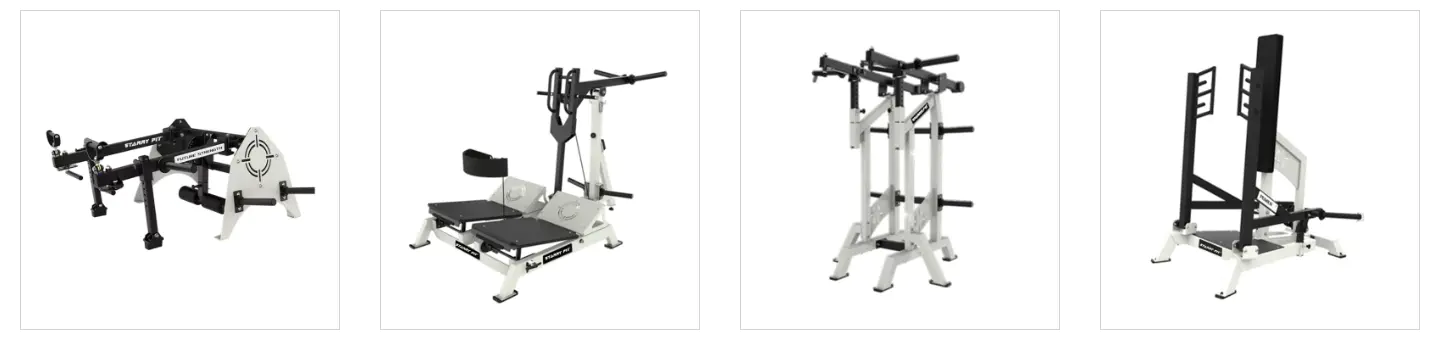
Independent Arm Movement Builds Balanced Chest Strength
On a standard fixed bar press, the two hands are locked to one handle, so a stronger side of the body can quietly take over part of the work without the trainee noticing. On an iso-lateral chest press machine, each arm has its own lever and its own resistance path, so both the left and right pectoralis major, anterior deltoid, and triceps brachii are asked to contribute their own share of the pressing motion.
Why a Fixed Bar Can Hide a Strength Gap
When both hands share a single bar, a dominant arm can push slightly harder while the weaker arm rides along. Over months of training, this pattern can quietly widen the gap between sides. Independent arm pressing removes that shortcut, since neither arm can lean on the other.
General muscle engagement reference, illustrative comparison for training discussion only.
As the chart above illustrates, the largest relative difference between the two pressing styles tends to show up in core stabilizer involvement, since each arm moving independently asks the trunk to control rotation and keep the torso square through the entire repetition.
Greater Range of Motion Supports Full Pectoral Activation
A fixed handle bar limits how far the hands can travel inward or how deep the stretch position can go, because both sides are tied to the same piece of steel. An independent arm chest press machine allows each handle to travel through its own arc, which often means a deeper starting stretch at the chest and a fuller finish at lockout.
For a commercial gym, this matters because members training for general strength, muscle tone, or hypertrophy goals typically look for equipment that lets them feel a complete contraction. A longer usable range of motion, combined with a stable frame, can make the pressing movement feel more complete without asking members to manage loose dumbbells or a barbell path on their own.
| Feature | Iso-Lateral Chest Press | Bilateral Fixed Chest Press |
|---|---|---|
| Arm movement | Independent, two separate levers | Single connected handle bar |
| Typical range of motion | Longer, natural arc per side | Shorter, fixed arc |
| Muscle balance focus | Trains each side on its own | Stronger side may compensate |
| Core involvement | Higher, due to unilateral control | Lower, path is fully guided |
| Typical commercial use | General strength, bodybuilding style training, balance focused programs | Beginner introduction to pressing patterns |
Guided Press Path Reduces Strain on Pressing Members
Free weight pressing asks the shoulder and elbow joints to stabilize the bar or dumbbells throughout the set, which is valuable training but can feel demanding for members who are newer to structured strength work. An iso-lateral chest press machine keeps the arms moving along a guided track while still letting each side move independently, which can lower the coordination demand while keeping the pressing pattern close to a natural, unilateral motion.
A Steadier Path for Consistent Training Weeks
Members who feel supported by the equipment often return to the same station more consistently, since the movement feels approachable from the first session. A steadier learning curve can translate into steadier weekly attendance for a pressing exercise.
Illustrative training progression pattern over an eight week block, for general discussion purposes only.
Adjustable Positions Create Versatile Training Options
Most iso-lateral press stations built for commercial gyms include an adjustable seat and, on some models, adjustable handle positions. This lets a shorter member and a taller member both reach a comfortable starting position, and it lets a trainer adjust the setup for flat pressing angles or a slightly inclined angle depending on the station design.
Because the two arms move independently, a member can also choose to press one arm at a time while the other rests, which is a common technique for isolating a lagging side or for finishing a set once the stronger side has reached fatigue. This kind of flexibility supports a wider variety of programming, from general fitness circuits to more structured strength blocks, all on a single chest press machine.
- Adjust seat height so the handles sit in line with the mid chest
- Set both press arms to the same resistance for standard two arm pressing
- Reduce load and press one arm at a time to isolate a specific side
- Alternate arms in a controlled sequence for higher rep endurance style sets
Compact Footprint Supports Efficient Floor Planning
A single iso-lateral chest press machine typically occupies less floor space than setting up a bench with a separate rack, and it can reduce the need for two or three separate stations to cover a similar range of pressing angles. For a commercial floor plan, this can translate into more room for other equipment categories or a more open walkway between strength zones.
Approximate floor space reference in general planning units, for layout discussion rather than exact measurement.
Facility planners often weigh this kind of space comparison against expected member traffic, since a busy strength zone benefits from stations that cover more training needs within a smaller area.
Helps Address Left to Right Strength Imbalances
Many members carry a small strength difference between their left and right side, often without realizing it, since daily activities and other exercises can favor one side over time. Because an independent arm chest press machine makes each side work on its own, the difference becomes visible during training, and it can be addressed gradually by matching effort and rep count on both arms over successive sessions.
This benefit is one reason personal trainers in commercial settings often include a unilateral or independent arm pressing option somewhere in a general strength program, alongside other exercises, rather than relying only on bilateral pressing movements.
Encourages Higher Member Engagement on the Gym Floor
Equipment variety plays a role in how long a member stays engaged with a strength program. A commercial independent arm chest press adds a different feel compared with a standard fixed bar station, which can appeal to members who want a new pressing option without switching to free weights right away.
Trainers can also use the machine across a wide span of program styles, from beginner orientation sessions to more advanced hypertrophy blocks, which supports consistent utilization of the equipment throughout the day rather than only during peak free weight hours.
Iso-Lateral Versus Bilateral Chest Press: A Side by Side Look
Visual Comparison Across Key Training Factors
General reference comparison across common training factors, illustrative rather than measured data.
Neither format replaces the other entirely, and many commercial gyms keep both types on the floor, since a bilateral fixed press can be a comfortable entry point while an independent arm chest press machine adds the balance focused option described above.
Choosing an Iso-Lateral Chest Press Machine Manufacturer
Gym owners and facility planners sourcing a commercial iso lateral chest press machine generally look beyond the pressing motion itself and consider the frame construction, upholstery quality, pivot hardware, and how consistent the build is across a full equipment order. Working with an experienced iso lateral chest press machine manufacturer helps a facility keep multiple units matched in feel and finish, which matters when several stations sit side by side on a busy strength floor.
What Facilities Typically Evaluate
- Frame and weld quality across the pressing arms and main structure
- Smoothness and consistency of the independent arm pivot mechanism
- Upholstery material and stitching on the seat and backrest
- Availability of adjustable settings for a range of member heights
- Production consistency when ordering multiple units from one iso lateral chest press machine factory
Nantong Chima International Trade Co., Ltd. is a Nantong based supplier of commercial strength equipment, including the iso-lateral chest press line, and works as an iso lateral chest press machine supplier and OEM production partner for gym operators and distributors. The company places emphasis on ergonomics, durable materials, and practical design details in its equipment lineup, and its sporting goods range has reached gym operators and distributors across Europe, the Americas, and Southeast Asia. Alongside equipment design, the company also gives attention to more resource conscious production practices as part of its broader manufacturing approach.
For a facility comparing options, it can help to request sample photos or specifications from a potential iso lateral chest press machine manufacturer, review the adjustability range of the seat and handles, and confirm how the independent arm mechanism feels through a full repetition before finalizing an order for a commercial independent arm chest press station.
Structural Overview of an Iso-Lateral Chest Press Machine
Understanding the main parts of the machine can help staff explain proper setup to new members and help facility teams plan maintenance checks. The illustration below shows a simplified structural layout of a typical independent arm chest press machine.
Simplified structural reference for a typical commercial iso lateral chest press machine.
| Component | General Function |
|---|---|
| Adjustable seat | Sets handle height relative to chest for different member heights |
| Pivot point | Anchors each independent press arm on its own rotation axis |
| Press arms and handles | Deliver resistance along a guided arc for each side separately |
| Backrest | Supports the torso and helps keep shoulder position stable |
| Main frame and base | Provides overall stability and anchors the resistance system |
Frequently Asked Questions
- Q1: What is an iso-lateral chest press. It is a pressing machine with two independently moving arms, so each side of the chest, shoulder, and triceps can be trained on its own path rather than sharing a single fixed bar.
- Q2: What does an iso-lateral chest press work. It primarily targets the pectoralis major, with secondary involvement from the anterior deltoid and triceps brachii, plus additional core stabilization to control each arm.
- Q3: What muscles does an iso-lateral chest press work. The main muscles are the chest, front shoulder, and back of the upper arm, along with supporting stabilizer muscles through the torso.
- Q4: What is an independent arm chest press. It is another common term for the same equipment style, describing the two separate press arms that move without being connected to one another.
- Q5: How does an iso-lateral chest press work. Each handle is attached to its own lever and pivot, so pressing with one arm does not move or assist the opposite side, unlike a shared bar design.
- Q6: What is the difference between iso-lateral and bilateral chest press. A bilateral press uses one connected handle for both hands, while an iso-lateral press uses two separate arms that move independently through their own range of motion.
- Q7: Is an iso-lateral chest press good for chest development. Many trainers include it as part of a broader chest program, since the longer range of motion and balanced arm engagement support general pressing development.
- Q8: Is an iso-lateral chest press better than a bench press. The two exercises serve different purposes, and many commercial programs use both, since a bench press builds general pressing strength while an iso-lateral machine adds a guided, balance focused option.
- Q9: Can you use an iso-lateral chest press one arm at a time. Yes, the independent arm design allows single arm pressing, which is a common technique for isolating one side or finishing a set after the other side reaches fatigue.
- Q10: Does an iso-lateral chest press help with muscle imbalance. Because each side must work on its own, differences between left and right strength become visible during training and can be addressed gradually through consistent practice.