ENG
ENG
 English
 Français
 Español
 عربى
عربى
A 600-square-meter fitness club is a serious capital project. Before the doors open, the purchasing team has to select 35 to 50 equipment types, balance a six-figure budget against member expectations, and plan for the daily wear that a busy gym floor produces. Miss one of those decisions, and the facility either burns cash on repairs or fails to keep members engaged.
This guide covers the practical side of buying fitness equipment for commercial gyms: how commercial-grade products differ from residential ones, how to allocate floor space and budget, and how to structure the buying process so the finished floor survives real traffic.
What Makes Commercial Gym Equipment Different from Home Gear
Commercial-grade equipment is engineered for a workload that residential gear never sees. A treadmill on a club floor can log ten to fourteen hours of running per day; a functional station with resistance bands, abdominal wheels, and push-up bars is used continuously from early evening until closing time. That difference in duty cycle changes everything about how a product is built.
Here is what to verify before you buy:
- Frame construction. Commercial strength tools use thicker steel tubing and reinforced welds, documented against ISO 20957-1 safety requirements.
- High-wear components. Sealed bearings, hardened pulleys, and steel guide rods handle continuous movement without developing play.
- Surface treatment. Powder-coated frames and electroplated hardware resist sweat and daily sanitizing far better than standard paint.
- Foam and upholstery. High-density foam with PVC or leather-touch covers keeps its shape under daily compression.
- Warranty structure. Commercial warranties cover parts for two to five years and frames for five to ten; residential policies rarely pass one year.
If a vendor cannot document frame gauge, coating process, or the safety standard behind the product, treat the equipment as residential-grade and plan the maintenance budget accordingly.
How to Allocate Floor Space in a Commercial Gym
Floor area is the most expensive asset in any gym, so the equipment plan should follow a deliberate zoning structure. Facility designers commonly organize full-service commercial gyms into five or six zones. The exact mix depends on the business model — a 24-hour budget club leans heavily on cardio, while a boutique strength studio turns the ratios upside down — but the values in the chart below are a sound starting benchmark for a balanced floor.
The general principle: give cardio and free weights the most area because they serve the widest range of members, then develop functional training and recovery zones with equipment that fits smaller footprints but creates a distinct experience. Mobile tools such as adjustable aerobic steps, resistance bands, and abdominal wheels let you convert part of the functional zone into a class space when needed.
| Zone | Typical floor share | Core equipment types | Main durability watchpoints |
|---|---|---|---|
| Cardio | 25–30% | Treadmills, bikes, ellipticals, steppers | Belts, bearings, consoles |
| Strength | 20–25% | Plate-loaded and selectorized machines | Cables, pulleys, upholstery |
| Free weights | 15–20% | Dumbbells, barbells, benches, racks | Coatings, plate durability |
| Functional training | 10–15% | Ab wheels, push-up bars, bands, steps | Foam, hinges, band elasticity |
| Stretching and recovery | 8–12% | Yoga mats, massage balls, foam rollers | Surface density, grip |
Durability, Safety Standards, and the Risks to Manage
Commercial gym equipment buying turns on three questions: Is it safe? Will it survive the traffic? Can the supplier prove it?
Start with standards. ISO 20957-1 is the core international safety specification for stationary training equipment. It covers frame stability, structural integrity under load, and overload testing. European purchasers still encounter the EN 957 series in older documentation; the two references describe the same testing intent. A supplier prepared to show conformity documentation is a supplier with a real quality process in place.
Then inspect the weak points that fail first under gym traffic:
- Anchoring hardware on resistance bands and cables. A hook or strap that bends or frays under tension is a commercial liability.
- Foam on strength tools. Hand grips and push-up handles need dense foam and thick PVC covers; low-density versions flatten quickly.
- Moving parts on core tools. An abdominal wheel with a thin stamped axle wobbles fast; a steel axle with a brake mechanism is safer and lasts longer.
- Coatings on dumbbells and racks. Cheap coatings chip and then corrode from sweat exposure.
Order samples before a bulk purchase. One or two sample units let you feel the axle quality, foam density, and weld finish — details that no website photograph can communicate.
Budgeting with Cost-per-Use Math
Sticker price is the wrong way to compare commercial gym equipment. The metric that matters is cost per use over the planned life of the product. A commercial-grade station priced at $10,000, used for 50 sessions a day across five years, delivers roughly 91,000 uses — about $0.11 per use. A comparable residential unit at $5,000 cannot absorb that traffic; repairs begin in year one, replacement arrives by year three, and the total spend overtakes the commercial option.
The same pattern repeats across categories. Cardio machines, strength stations, and the most popular free weights handle the heaviest traffic and deserve the highest-grade construction you can afford. Lower-traffic spaces — a quiet stretching corner, a member lounge, a studio used twice a week — are the only places where light-duty products make financial sense.
How to Choose a Supplier for Commercial Gym Equipment
Equipment buying is also a supply-chain decision. A full facility spans dozens of product categories, and every extra supplier multiplies logistics, inspection, and warranty risk. Consolidating through one manufacturer that produces several categories under one roof simplifies procurement and keeps visual design consistent across the floor.
Work through a short checklist when evaluating suppliers:
- Verify manufacturing status. Ask whether the company operates the factory itself or acts as a trading intermediary, and look for production-floor detail on the company's about page — manufacturers have more to show.
- Check certificates and test evidence. Published records on the company's certificate section give a quick baseline for ISO 9001 and product safety compliance.
- Assess the product range. A supplier that makes strength tools, yoga and Pilates equipment, and recovery products in one catalog shortens your sourcing list for a mixed facility.
- Confirm customization options. Check colors, logo application, and packaging, and confirm that minimum order quantities match your project scale.
- Request samples before bulk orders. Axle quality, foam density, and weld finish do not show up in a catalog.
Building Functional and Recovery Zones That Work Hard
Functional training and recovery are the fastest-moving parts of commercial gym design — and the easiest zones to upgrade with modest capital. A compact functional area with a few abdominal wheels, push-up bars, resistance bands, and aerobic steps can turn 40 square meters into a strong member attraction.
These are the pieces commercial operators should prioritize:
- Abdominal wheels. Durable, compact, and effective for core strength. A brake-type abdominal wheel
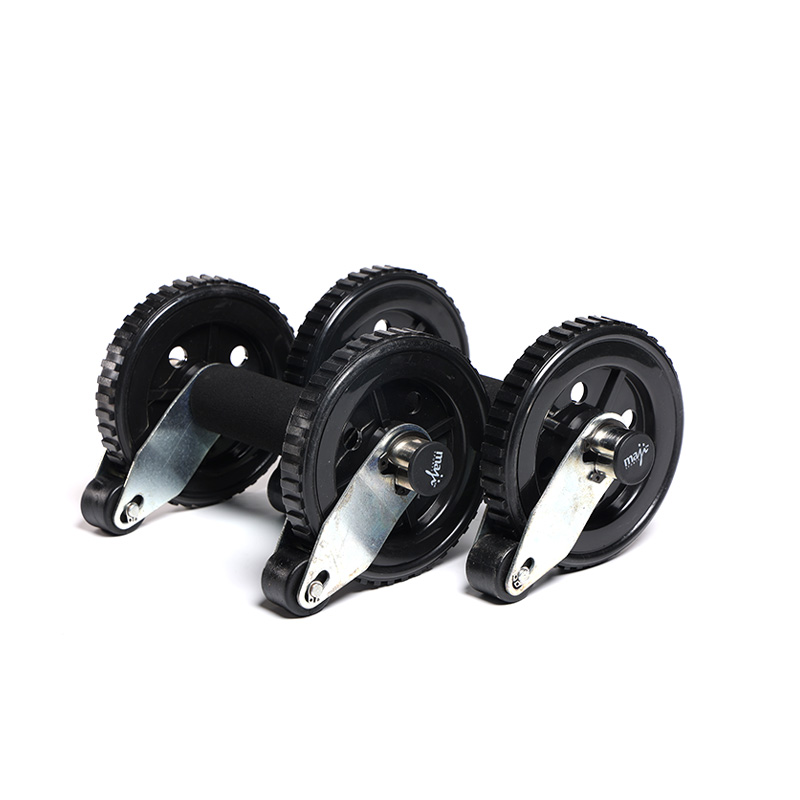 Wholesale Brake Abdominal Wheel Suppliers, OEM/ODM Factory - Nantong ChiMa InterNantong ChiMa International Trade Co., Ltd. is a China OEM Brake Abdominal Wheel suppliers and ODM Brake Abdominal Wheel factory, Profess...View Product → gives beginners a controlled range of motion and reduces the risk of overextension in unsupervised settings.
 - Push-up bars. Raised handles reduce wrist strain and improve chest and triceps activation. Check grip diameter, handle height, and whether the base stays planted during high-rep sets.
- Resistance bands. Essential for warm-ups, mobility drills, and accessory strength work. Band material, handle stitching, and metal connectors determine commercial life.
- Aerobic steps. Ideal for group classes, HIIT circuits, and step drills. Look for adjustable aerobic step platforms
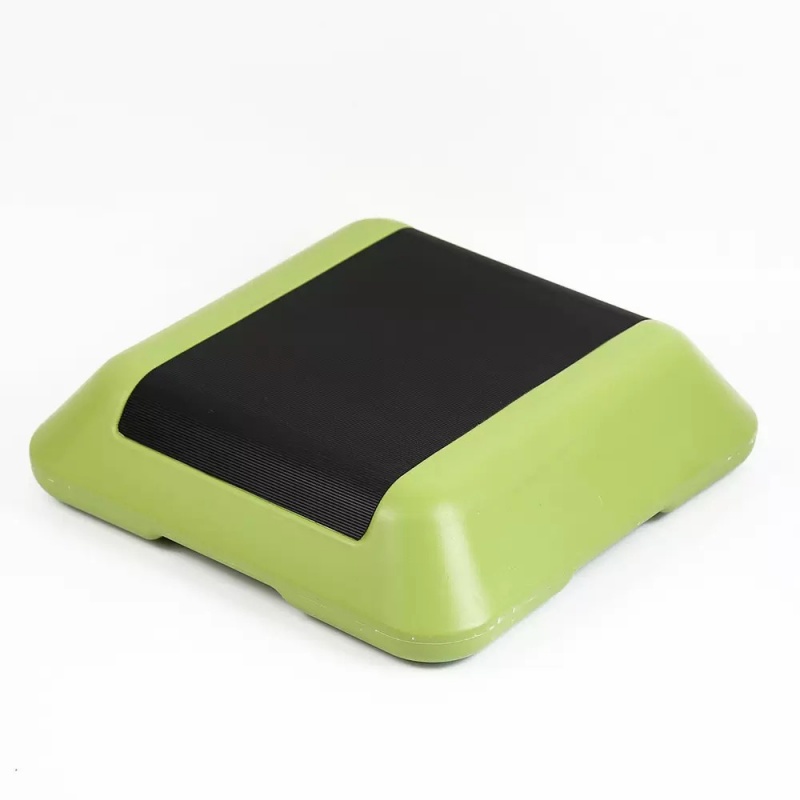 Wholesale 40cm Adjustable Aerobic Step Platform Suppliers, OEM/ODM Factory - NaNantong ChiMa International Trade Co., Ltd. is a China OEM 40cm Adjustable Aerobic Step Platform suppliers and ODM 40cm Adjustable Aerob...View Product → with textured tops — they suit high-turnover class schedules and a wide range of member heights.
 - Yoga and recovery tools. A dedicated stretch area with quality mats, massage balls, and foam rollers reduces injury rates and raises perceived club value.
In the recovery zone, mat quality is the single biggest decision. A high-density TPE yoga mat stays grippy after repeated cleaning and handles daily ab work and stretching without flattening or peeling.
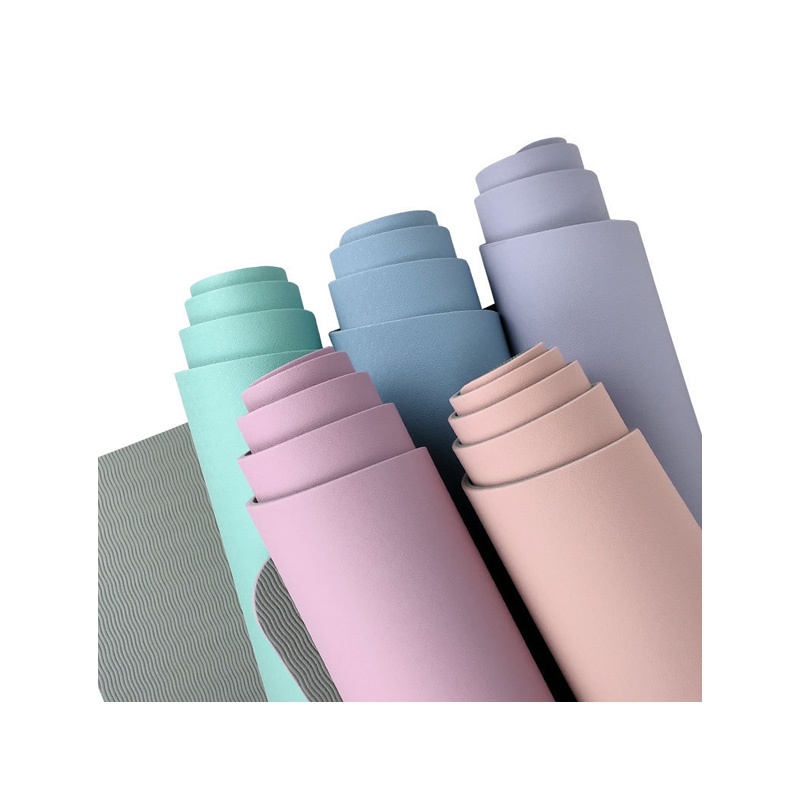 Wholesale TPE Yoga Mat Suppliers, OEM/ODM Factory - Nantong ChiMa International Nantong ChiMa International Trade Co., Ltd. is a China OEM TPE Yoga Mat suppliers and ODM TPE Yoga Mat factory, Professional wholesale TP...View Product →
Common Questions About Commercial Gym Equipment
What is the most essential fitness equipment for a commercial gym?
Treadmills and bikes for cardio, a range of dumbbells with adjustable benches for strength, and resistance bands or abdominal wheels for functional work form a practical core. Together they cover the majority of member routines in any commercial gym.
How much does it cost to equip a small commercial gym?
A compact functional studio can open with $20,000 to $40,000 in equipment. A multi-zone small commercial gym of 300 to 600 square meters typically invests $80,000 to $200,000 depending on cardio volume and strength-station grade.
What is the lifespan of commercial gym equipment?
Commercial cardio machines usually run 7 to 10 years with consistent maintenance. Strength machines and free weights last 10 to 15 years. Functional accessories such as resistance bands, push-up bars, and abdominal wheels typically need replacement every 2 to 5 years depending on usage volume.
How do I choose a reliable commercial gym equipment supplier?
Verify that the supplier is a manufacturer or works with a vetted factory, request certificates and test reports, order samples before bulk purchasing, and check warranty terms, spare-parts policy, and customization options before committing to a large order.
What safety standards apply to commercial fitness equipment?
ISO 20957-1 is the international safety reference for stationary training equipment, covering stability, strength, and overload testing. Many suppliers also document EN 957 compliance for European markets and CE marking where applicable.
What functional training equipment is most in demand for commercial gyms?
Abdominal wheels, push-up bars, resistance bands, agility ladders, and adjustable aerobic step platforms lead the list. They deliver visible conditioning results in a small footprint and suit a broad range of member abilities.