ENG
ENG
 English
 Français
 Español
 عربى
عربى
Standing at the entrance of a new gym, you already know what a treadmill and a squat rack look like. The row of arm machines is less obvious. Between the bicep curl machine, the preacher curl bench, and two different triceps stations, it is easy to guess wrong and end up using a piece of equipment for the opposite of its purpose. This guide explains the most common gym equipment names for arms, what each piece does, and how to match the equipment to your training goal — whether you are a first-time gym user or a purchasing manager equipping a facility.
Know Your Arm Equipment Categories First
Arm training equipment falls into four practical groups: machines, free weights, bodyweight tools, and grip-specific gear. Each group solves a different problem. Machines keep your movement path fixed, which is helpful while you are learning an exercise. Free weights let your joints and stabilizers work naturally. Bodyweight tools add coordination and require minimal space. Grip devices address the forearm and hand strength that often limit pulling exercises.
The chart below shows how many of the four main arm muscle groups — biceps, triceps, forearms, and shoulders — each equipment type can cover in a typical session.
Cable machines and dumbbells top the list because they support more than one movement angle. That is why most arm-day routines start with those options and finish with machines like the bicep curl or triceps dip for a targeted pump and fatigue.
Machine-Based Arm Equipment: What Each One Does
Commercial gyms stock a recognizable set of arm machines. Knowing their names is the first step toward building a workout without having to stop and watch another lifter use the station.
Bicep Curl Machine
The bicep curl machine holds your upper arms against padded supports while you curl the handles forward. The fixed path keeps tension on the biceps and removes most of the balancing effort, which makes it an excellent starting point for beginners. It targets the biceps brachii and the brachialis, with limited forearm involvement.
Preacher Curl Bench
A preacher curl bench provides an inclined pad that supports your upper arms while you curl an EZ-bar, dumbbells, or a cable attachment. Because the pad prevents swinging, the biceps work in strict isolation, and the short head receives extra emphasis. It is the standard station for lifters who care about biceps peak contraction.
Triceps Dip Machine
The triceps dip machine, also called the triceps press machine, lets you push two handles downward against adjustable resistance. It isolates the triceps without requiring the balance of a bench dip or a barbell extension. Keeping your elbows tucked close to your torso shifts even more tension to the long head of the triceps.
Cable Machine
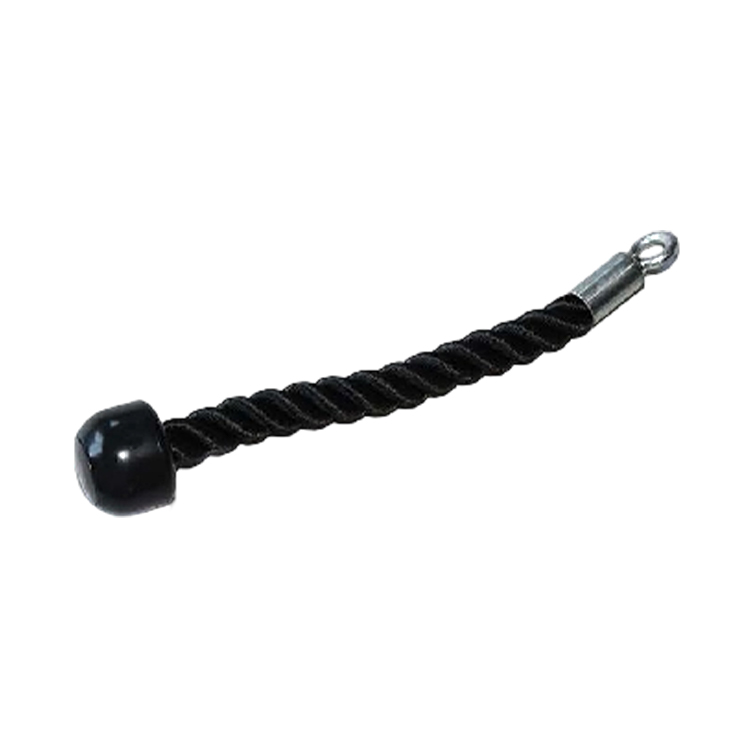
A cable station is the most versatile arm machine in a gym. With a rope or straight-bar attachment, you can do triceps pushdowns, overhead extensions, cable curls, and reverse curls. Because the cable stack keeps constant tension through the full range of motion, it is ideal for finishing sets after the muscles have already been fatigued by heavier weights.
| Equipment | Primary Target | Movement Type | Best For |
|---|---|---|---|
| Bicep curl machine | Biceps | Machine isolation | Beginners and hypertrophy |
| Preacher curl bench | Biceps (short head) | Free-weight isolation | Peak contraction |
| Triceps dip machine | Triceps | Machine isolation | Triceps mass |
| Cable machine | Biceps, triceps, forearms | Compound + isolation | Full arm training |
If you are equipping a gym rather than training in one, keep in mind that these machines work best alongside free-weight benches, curl bars, and grip tools. A complete strength training equipment range covers both guided machines and open tools so every member can train at their own level.
Free Weights for Arms: The Practical Foundation
Dumbbells are still the most direct piece of gear for arm development. Unlike machines, they allow natural joint movement, so the stabilizer muscles in your shoulders and forearms work harder. Dumbbell curls, hammer curls, triceps kickbacks, and overhead extensions together cover all four arm muscle groups in a single session.
For a home gym, a pair of adjustable or fixed dumbbells saves space and serves most arm exercises. Foam-covered dumbbells are a reasonable choice for low-impact sessions and for users who prefer a softer grip feel. Whatever version you pick, control the tempo: an eight-to-fifteen rep range with a two-second lowering phase builds muscle more effectively than swinging heavy weight.
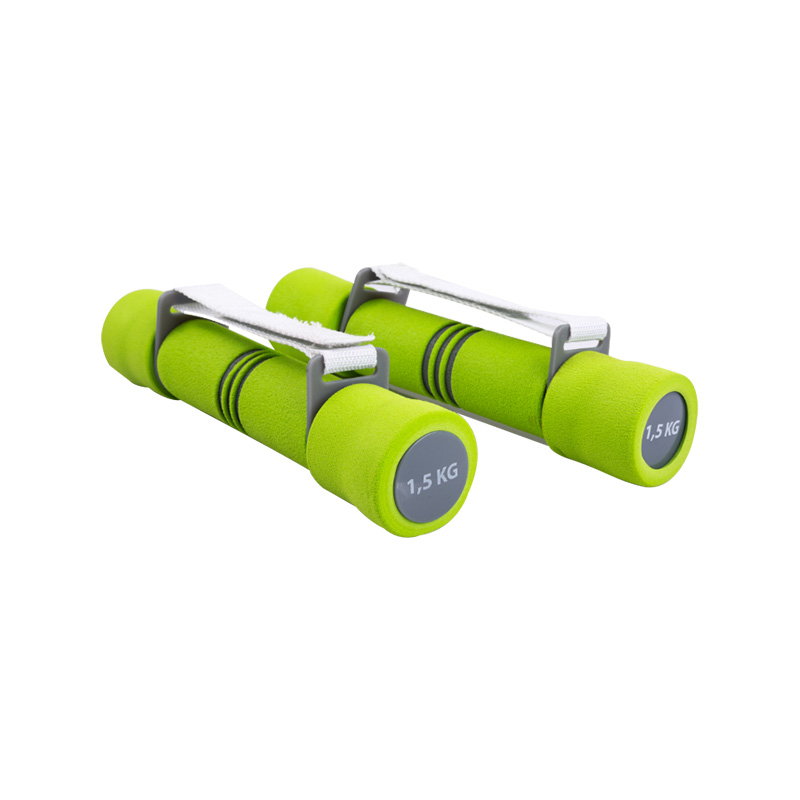 Foam-Covered PVC Dumbbells with Adjustable StrapThese lightweight dumbbells offer a cushioned grip and several weight options, making them a practical choice for home arm workouts where space is limited and comfort matters.View Product →
Bodyweight and Portable Arm Equipment
You do not need a wall of machines to build stronger arms. Pushup bars, resistance bands, pull-up bars, and dip stations can support a complete arm day with a very small footprint.
Pushup bars lift your hands off the floor, which reduces wrist strain and lets you sink deeper into each repetition. That extra depth increases triceps activation compared with a palm-on-floor pushup. Rotating and S-shaped pushup bars also change the grip angle, which adds variety for the triceps and chest. They are light, inexpensive, and simple to store, making them a practical first purchase for a home gym.
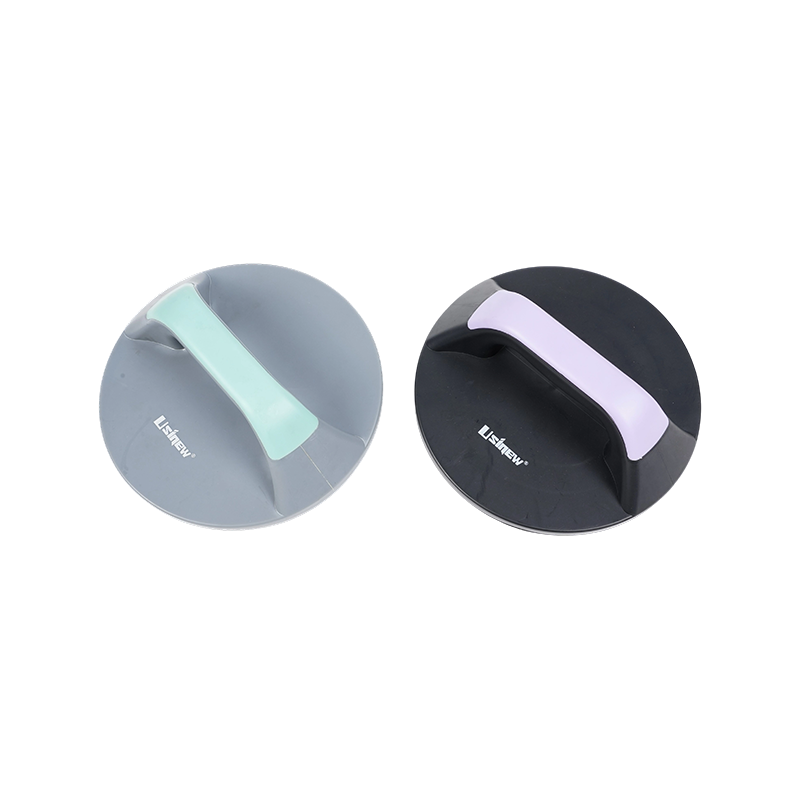 Rotating Pushup Bars for Chest and TricepsThe rotating grip adds joint-friendly variety to standard pushups, increasing triceps engagement while staying compact and portable for small home gym setups.View Product →
Resistance bands fill the same role when you travel. Attach one to a door anchor or a fixed post and you can do curls, pushdowns, and overhead extensions anywhere. The tension rises as the band stretches, so the exercise becomes harder exactly where the muscle shortens. Combine pushup bars, a pull-up bar, and two resistance bands, and you have a compact home gym that covers pushing, pulling, and isolation work.
Grip and Forearm Equipment: The Missing Link
Many lifters notice their grip giving out before their biceps or back during pulling exercises. Grip-specific tools close that gap. Hand grip strengtheners, grip rings, wrist rollers, and arm strength bars build the flexors and extensors of the forearm, and they improve your ability to hold dumbbells, chin-up bars, and deadlift bars.
An adjustable hand grip strengthener is the most straightforward option because you can raise the resistance as your strength improves. Counting models add rep tracking, which is useful for measuring progress. Add two or three quick sets of grip work after your arm session; the forearm muscles recover quickly, so they do not slow down your next workout.
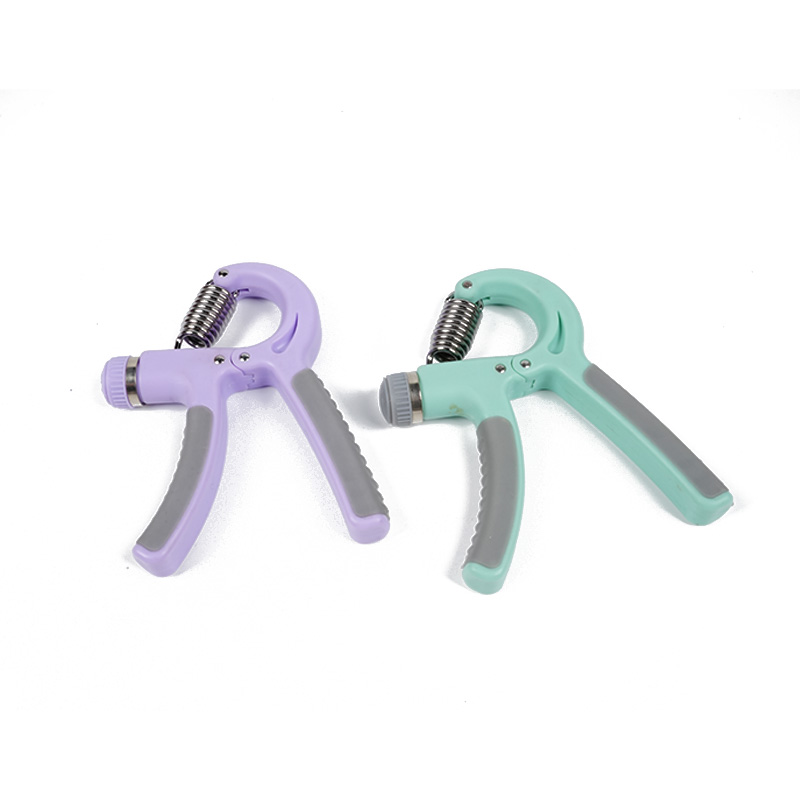 Adjustable Hand Grip Strengthener with RopeThis compact grip trainer allows progressive resistance increases and includes a long rope for versatile forearm exercises, ideal for quick post-workout sets.View Product →
Choosing Arm Equipment for a Home or Commercial Gym
The right arm equipment depends on the user, the available space, and the training goal. Beginners benefit from guided machines because they teach movement patterns and reduce injury risk. Experienced lifters get more adaptation from free weights and bodyweight progressions. Gym owners and purchasing managers need to prioritize durability and maintenance cost.
This isometric view shows how each equipment category maps to a specific arm muscle group.
Once you see the pattern, the buying logic becomes clear: choose equipment that covers curling, pressing and extending, and gripping movements, rather than adding a sixth machine that repeats the same angle. Also consider the following:
- Space: large machines need a permanent floor area; resistance bands and dumbbells store compactly.
- Durability: commercial environments require heavy-duty frames and materials that survive repeated use.
- Versatility: one cable station can replace two single-purpose machines.
We understand these trade-offs well because we manufacture fitness equipment rather than only distributing it. Our factory background shapes how every product is built and tested; you can learn more about our company here.
Frequently Asked Questions
Q1: What gym equipment names for arms should beginners know?
The essentials are the bicep curl machine, preacher curl bench, triceps dip machine, cable machine, dumbbells, and hand grip strengthener. Knowing these names helps you follow workout plans and ask gym staff for guidance.
Q2: What is the best arm machine for building biceps?
The bicep curl machine is the safest for beginners because it fixes the movement path. Advanced lifters often prefer the preacher curl bench for strict isolation and peak contraction.
Q3: What is the best equipment for triceps?
The triceps dip machine and the cable rope pushdown are the most effective choices. Both keep constant tension on the triceps and are simple to learn.
Q4: Can I build arm muscle without machines?
Yes. Dumbbells, pushup bars, resistance bands, and pull-up bars can build arm size and strength. Machines are convenient, not essential.
Q5: How many times a week should I train arms?
Two or three direct arm sessions per week is enough for most lifters. Leave at least 48 hours between sessions so the muscles can recover.
Q6: What arm equipment should a home gym start with?
A pair of dumbbells, pushup bars, and a hand grip strengthener make a solid starter kit. Add resistance bands when you want more exercise variety.