ENG

 English
 Français
 Español
 عربى

Walk along a dumbbell rack and you will notice something: the weights jump in 2.5 kg steps. Cross the room to the Olympic plates and the jump becomes 1.25 kg. On the selectorized machines it is usually 5 kg, and on the kettlebell rack it is 4 kg. Same gym, same purpose, four different resolutions of load.
That single difference explains most of why lifters reach for one type of weight and not another. Gym weights are not interchangeable objects; they are categories with their own range, precision and handling. The short answer: there are five working families — free weights such as barbells, dumbbells and kettlebells; machine and cable weights; plate-loaded and add-on weights; added-load tools such as vests and ankle weights; and functional weights such as medicine balls and sandbags. Most programmes need two or three of them, not one.
The main types of weights in a gym, at a glance
Before the detail, here is how each category lines up on load range, the smallest practical jump and the job it does best.
| Type of weight | Typical load range | Smallest practical jump | Where it works best |
|---|---|---|---|
| Fixed dumbbells | 1–50 kg per hand | 2.5 kg, often 1 kg at the light end | Pressing, rows, arm work |
| Adjustable dumbbells | 2–32 kg per hand | 1.25–2.5 kg | Home gyms, small studios |
| Olympic bar and plates | 20 kg bar, 300 kg and above | 1.25 kg per pair, 0.5 kg with micro plates | Squat, deadlift, press |
| Kettlebells | 4–48 kg | 4 kg | Swings, cleans, carries |
| Selectorized machine stack | 5–120 kg | 2.5–5 kg, halved by half plates | Isolation, beginners, rehab |
| Plate-loaded machine | Depends on plates loaded | 1.25 kg | Heavy pressing and rowing |
| Weighted vest | 5–20 kg | 0.5–1 kg | Calisthenics, running, carries |
| Sandbag | 5–30 kg | Adjustable by filling | Carries, ground-to-shoulder |
| Medicine and wall ball | 1–15 kg | 1 kg | Throws, conditioning |
| Ankle and wrist weights | 0.5–5 kg | 0.5 kg | Rehab, endurance work |
Smallest jump between available loads (kg)
Values are the standard metric increments used by most commercial suppliers.
That chart matters more than it looks. If a programme calls for a 2 kg increase, a 5 kg machine stack cannot deliver it — the lifter has to change exercise or bolt on a small plate. Gym buyers hit the same wall from the other side: a rack that steps 5 kg at a time leaves a permanent gap for beginners and for rehab clients.
Free weights: barbells, dumbbells and kettlebells
Free weights are the reference point for load precision. Every other category is measured against them.
Barbells and Olympic plates
A men's Olympic bar weighs 20 kg and a women's bar 15 kg, both with a 50 mm sleeve diameter; a pair of spring collars adds roughly 2.5 kg. Plates come in a standard metric series — 25, 20, 15, 10, 5, 2.5 and 1.25 kg — so the smallest useful pair adds 2.5 kg to the bar. Micro plates of 0.5 kg and 0.25 kg exist for the same reason adjustable dumbbells exist: to make the gap between attempts smaller.
Standard metric plate denominations (kg per plate)
A 20 kg men's Olympic bar is added on top of any plate combination.
Home and studio bars usually use a 25 mm sleeve and 1-inch plates, which cost less but are generally not rated for the same drop or total load. For a commercial floor, sleeve diameter, collar fit and bar whip matter more than the headline load rating.
Dumbbells
Fixed dumbbells are the most-used weights in most gyms. Commercial racks move in 2.5 kg steps, with 1 kg or 1.5 kg steps at the light end where beginners live. Handle diameter sits between 28 and 32 mm, and head shape matters: hex heads will not roll when set down, round or urethane heads wipe clean more easily. Rubber, urethane and cast-iron heads sound and feel different on the floor, and only some are rated for repeated drops.
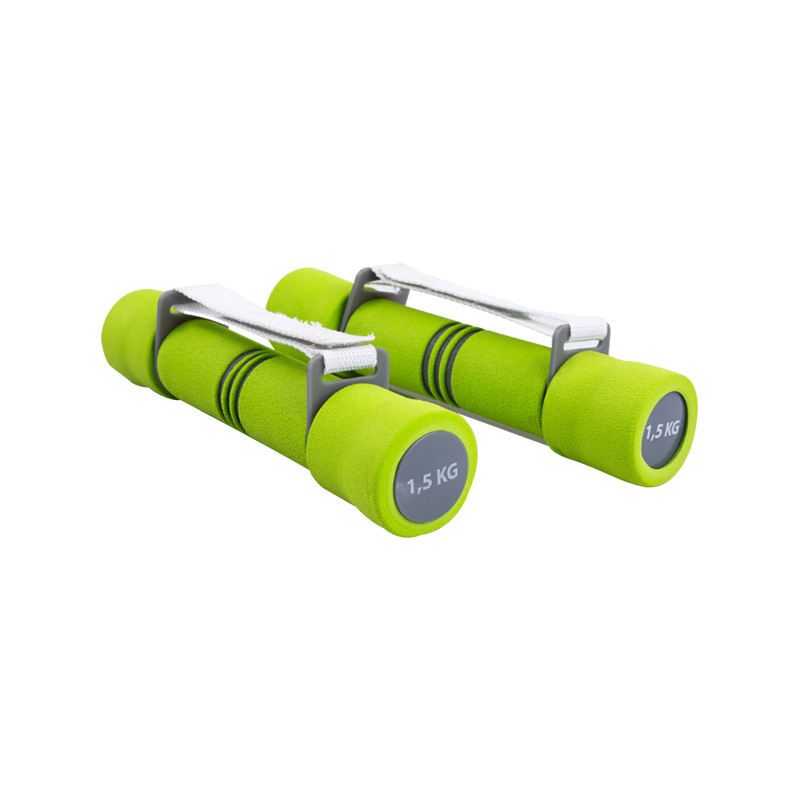 Foam Dumbbells with PVC Back Cover and WebbingLightweight 0.5-2 kg dumbbells with foam and PVC cushioning, round steel core, and adjustable webbing grip for comfortable basic strength training.View Product →
Not every dumbbell on a gym floor is heavy iron. The light end of the rack — roughly 0.5 kg to 3 kg — is usually a different product class: vinyl, neoprene or foam-bodied dumbbells used for warm-ups, group classes and aqua fitness, where a soft coated body protects both the floor and the user.
Isometric view: what buyers actually specify on a dumbbell
Flat isometric schematic of a hex-head dumbbell; proportions are illustrative, not to scale.
Kettlebells
Kettlebells step in 4 kg increments across most ranges, which makes them poor for fine progression but excellent for swings, cleans and loaded carries. Handle thickness is the specification buyers overlook most often: 33 mm to 39 mm is common, and a thicker handle changes grip demands considerably. Competition kettlebells keep a constant 280 mm bell diameter regardless of weight, so technique does not shift as the load rises.
Machine and cable weights
Selectorized machines hold a stack of rectangular steel plates that the user selects with a pin. In metric markets the stack moves in 5 kg steps, in imperial markets 10 to 15 lb, and many suppliers offer half plates that halve the step. The advantage is speed and safety: the load travels a fixed path, so a tired or inexperienced lifter cannot be trapped underneath it.
Plate-loaded machines and cable stations behave differently again. Because they work through levers and pulleys, the number printed on the plate is not the load at the handle. A 2:1 cable ratio means 20 kg on the stack gives roughly 10 kg of resistance, and leverage on a plate-loaded press can make 40 kg of plates feel considerably heavier at the handles. When comparing equipment, compare the load at the handle and the smallest achievable step, not the sticker on the stack.
Added-load tools: vests, belts, ankle and wrist weights
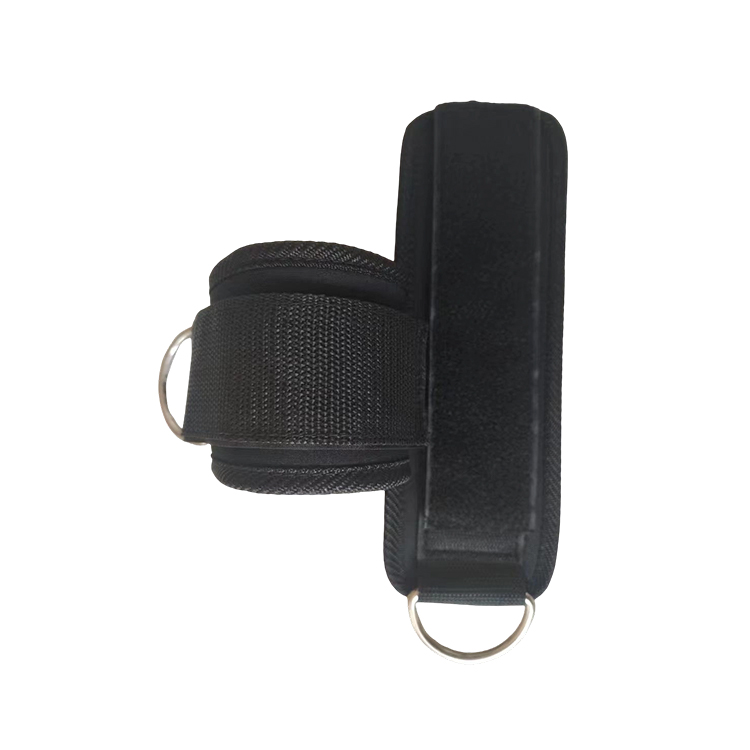
These are weights you wear rather than lift. A weighted vest typically runs from 5 kg to 20 kg, using either steel plates or sand filling, and the better models adjust in 0.5 kg or 1 kg increments. Dip belts, ankle weights and wrist weights follow the same logic: they add load to a movement you already own, so the exercise pattern stays honest and the progression is easy to control.
Fit and load distribution decide whether they actually get used. A vest that rides high on the shoulders changes breathing; ankle weights above 3 kg alter running gait; wrist weights should stay under about 2.5 kg so the arm does not swing out of its natural path.
 Neoprene Weighted Vest, 10 kg, 48 x 40 cmA 10 kg neoprene weighted vest, 48 x 40 cm, for weight and assist training; fit and load distribution matter for comfortable use.View Product →
Functional and odd-object weights
Sandbags, Bulgarian bags, medicine balls and wall balls sit in their own group because their weight shifts. A sandbag filled to 20 kg does not behave like a 20 kg dumbbell — the centre of mass moves as the bag deforms, which is exactly why coaches use them for carries and ground-to-shoulder work. Buyers should look at the shell fabric, the inner filler bags, and whether the load can be adjusted in 1 kg steps.
 Leather PVC Fitness Sandbags, 5-30 kgFitness sandbags in 5-30 kg leather PVC, grouped with shifting-weight tools for carries and ground-to-shoulder strength work.View Product →
Medicine balls run from about 1 kg to 15 kg, and the choice between bouncing and non-bouncing construction usually matters more than the weight itself. Wall balls, commonly specified in 4, 6, 9 and 14 lb for competition use, are a separate category again.
What to specify before you buy weights
If you are buying for a gym, a studio or a retail programme, the number moulded into the side of the weight is the least interesting figure on the product.
- Weight tolerance. Cast iron is normally held to roughly plus or minus 3 percent; ask for a sample weighing rather than a certificate alone.
- Handle and sleeve dimensions. 28 to 32 mm for dumbbell handles, 50 mm for Olympic sleeves, 25 mm for standard home bars.
- Coating and odour. Rubber crumb, urethane and PU-coated heads differ in odour, floor marking and cost per kilogram; indoor studios notice the difference within the first hour.
- Drop rating. A commercial rack needs heads that survive being set down from waist height thousands of times.
- Packing and container load. Plates and dumbbells are dense cargo, so carton weight, pallet height and container weight limits shape your landed cost more than the unit price does.
- Verification. Ask to review the production line and testing process before placing a repeat order.
Matching the weight type to the training goal
Strength work with a barbell needs 1.25 kg resolution and a rack. Hypertrophy work with dumbbells needs a rack that steps 2.5 kg and does not skip sizes in the middle of the range. Beginners and rehab clients do better on selectorized stacks, where the pin sets the load and the path is fixed. Conditioning work — carries, swings, throws — runs on kettlebells, sandbags and wall balls, where a 4 kg jump is normal and precision is not the point. If you are deciding what to buy first, the order is usually a dumbbell set, an adjustable bench, a barbell and plates, then machines; a short primer on essential equipment walks through the same logic from a home-gym angle.
Frequently asked questions about gym weights
Q1. What are the main types of weights at the gym?
Free weights such as barbells, dumbbells and kettlebells; selectorized and cable machine stacks; plate-loaded weights; added-load tools such as weighted vests and ankle weights; and functional weights including medicine balls and sandbags.
Q2. What weight should a beginner start with?
Most beginners can start a dumbbell press at 5 to 8 kg per hand and squat with an empty 20 kg Olympic bar. Pick a load you control for 8 to 12 reps with about two reps left in reserve.
Q3. Dumbbells or barbells — which builds muscle faster?
Both build muscle when the effort is comparable. Barbells allow heavier total loads and finer progression; dumbbells correct left-right differences and need less space. Most programmes use both.
Q4. Are adjustable dumbbells worth it for a home gym?
They replace a rack of fixed dumbbells in a fraction of the floor space and often step in 1.25 to 2.5 kg. Trade-offs are slower weight changes and a mechanism that wears, so check the locking system specification.
Q5. How many kilograms should a commercial gym weight set cover?
A typical commercial floor covers 1 to 50 kg of dumbbells in 2.5 kg steps, plates from 1.25 to 25 kg, and kettlebells from 4 to 48 kg. Smaller studios can stop at 30 kg dumbbells and add plate-loaded machines for heavier work.
Q6. Do weighted vests and ankle weights actually work?
They increase the load on movements you already perform, so they work as long as the added weight does not change your technique. Vests of 5 to 15 kg are the most useful; ankle weights above 3 kg tend to alter running form.
The type of weight matters less than the resolution it gives you. A gym that steps 2.5 kg in dumbbells, 1.25 kg in plates and 2.5 kg on machine stacks can serve a first-time member and a competitive lifter from the same rack. Get that part right, and everything after it is maintenance.