ENG
ENG
 English
 Français
 Español
 عربى
عربى
The fitness abdominal wheel is a simple yet effective fitness tool that is becoming increasingly popular among fitness enthusiasts because it can simultaneously work the abdominal muscles, back muscles, shoulders, and arms – all core muscle groups. So, how long should you use a fitness abdominal wheel daily to see results?
1. The Training Principle of the Fitness Abdominal Wheel
The core function of the fitness abdominal wheel is to strengthen the core muscle groups and improve stability. During the forward and backward rolling motion of the abdominal wheel, the rectus abdominis, transverse abdominis, obliques, lower back muscles, and shoulder muscles are all activated. Unlike simple sit-ups, abdominal wheel training is a dynamic compound exercise that requires full-body coordination, which is why it effectively strengthens the core.
Through abdominal wheel training, you can achieve the following results:
Enhanced core strength: Stabilizes the torso and improves body balance.
Sculpted abdominal muscles: Consistent use can make abdominal muscles firmer and more defined.
Improved posture: Increased core strength helps reduce lower back pressure and improves posture and spinal stability.
Improved athletic performance: Provides support for activities such as running, weightlifting, and yoga.
2. Daily Training Time with the Fitness Abdominal Wheel
(1) Beginners
Beginners whose core strength is not yet fully developed should train for 10–15 minutes daily. The recommended schedule is:
Sets: 2–3 sets
Repetitions: 8–12 repetitions per set
Rest: 30–60 seconds between sets
Beginners should focus on mastering the correct technique and avoiding lower back injuries, rather than pursuing high intensity or high repetitions.
(2) Intermediate Trainers
As core strength gradually improves, intermediate trainers can train for 15–25 minutes daily, increasing the number of repetitions to 12–20 per set, maintaining 3–4 sets daily. Intermediate trainers can try increasing the difficulty of the exercise, such as single-knee or single-hand abdominal wheel exercises, or adding slow rolling pauses to further stimulate the muscles.
(3) Advanced Trainers
Advanced trainers can train for 20–30 minutes daily, combining it with other core training exercises (plank, crunches, leg raises, etc.), with more than 20 repetitions per set. They can try longer rolling distances or add resistance bands to increase training intensity. 3. Standard Abdominal Wheel Training Technique
Correct posture is essential for achieving results and protecting your lower back and shoulders. During training, pay attention to the following:
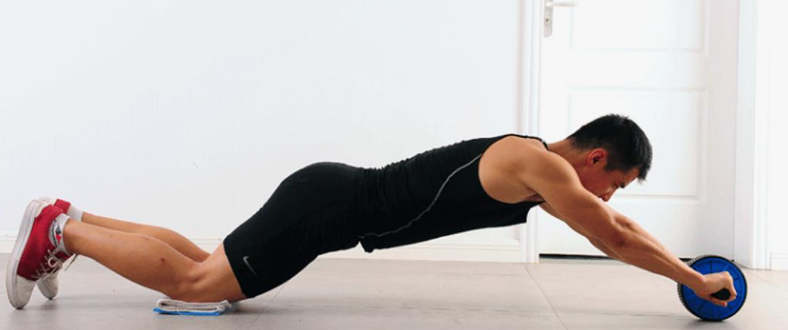
Starting position: Kneel on the ground, holding the abdominal wheel handles, keeping your back in a natural straight line.
Rolling motion: Slowly push forward, extending your body as much as possible, but avoid letting your lower back sag.
Core engagement: Keep your abdominal muscles tight throughout the entire process, maintaining abdominal muscle activation.
Pulling motion: Use your abdominal muscles to pull the abdominal wheel back to the starting position, avoiding using your arms or lower back.
Beginners can start with shorter rolling distances and gradually increase them as they become more proficient to avoid lower back injuries.
4. Timeline for Results
The effects of abdominal wheel training vary from person to person, mainly depending on training intensity, frequency, diet, and individual physique. The general pattern is as follows:
2–4 weeks: Improved core strength, more stable posture in daily activities, and smoother movements.
4–6 weeks: Abdominal muscle definition begins to appear, improved back and shoulder strength, and increased endurance.
8–12 weeks: Noticeable abdominal tightening effect, overall improvement in core strength, and significant benefits for other sports performance.
It's important to emphasize that using the abdominal wheel every day is not necessarily better. Properly scheduling training volume and rest days allows muscles to recover fully, leading to faster results.
5. Combining with Diet and Other Training
The effectiveness of abdominal wheel training depends not only on the equipment itself but also on:
Balanced diet: Control sugar and high-fat food intake, and increase protein intake to promote muscle growth.
Full-body training: Combine with aerobic exercise (running, jumping rope) and other core training to help reduce abdominal fat and improve muscle definition.
Regular sleep: Sufficient sleep helps muscle recovery and fat metabolism.
6. Precautions and Safety Suggestions
Avoid excessive strain on the lumbar spine: Beginners should master the correct technique and gradually increase the rolling distance.
Maintain knee protection: Place a soft pad under your knees to reduce pressure on the knee joints.
Control training frequency: It is recommended to rest for at least 1-2 days per week to allow the core muscles to fully recover.
Choose a suitable abdominal wheel: Beginners can choose products with non-slip handles and stable wheels to reduce the risk of injury.
Using the fitness abdominal wheel for 10-30 minutes daily, gradually increasing the intensity according to your core strength level, can effectively exercise the abdominal and core muscles. Noticeable results can usually be seen within 4-12 weeks. The key is proper technique, moderate frequency, and combining it with diet and full-body training. This will ensure safe and efficient abdominal muscle shaping and core strength improvement.
With consistent and scientific training, the abdominal wheel can not only help you develop ideal abdominal muscles but also improve posture, enhance athletic performance, and make core strength the foundation of your overall health.